What Is a 38x38mm IP Camera Module — and Why Do Procurement Teams Standardize on It?
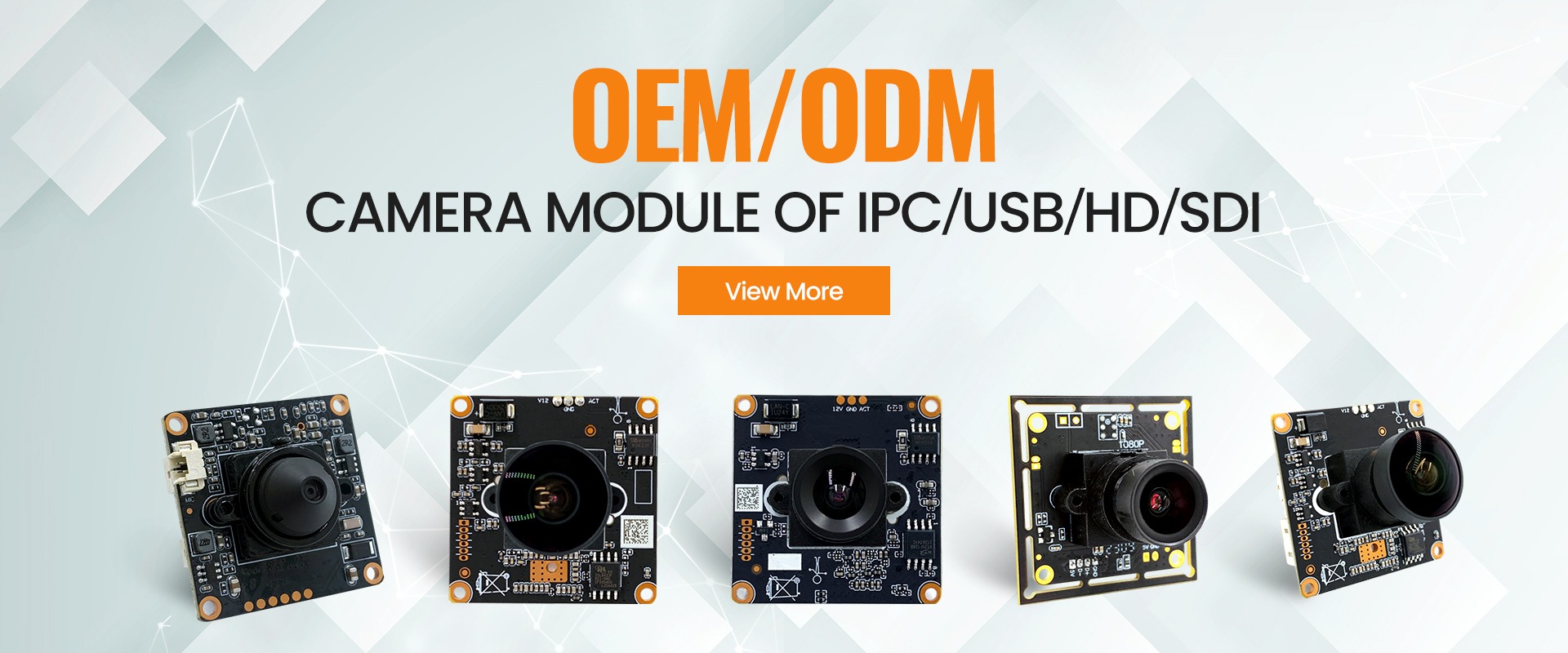
The 38x38mm IP camera module has quietly become the de facto standard board size for networked camera designs around the world. Whether the module ends up in an ATM fascia, a self-service kiosk, a smart vending cabinet, a retail dome or an industrial inspection enclosure, the 38 × 38 mm PCB footprint gives integrators a predictable mechanical anchor for optics, heat dissipation and cable routing. For a global procurement team, standardizing on 38x38mm boards removes the design gymnastics required by proprietary form factors and lets the enclosure, the sensor and the lens all evolve on independent roadmaps.
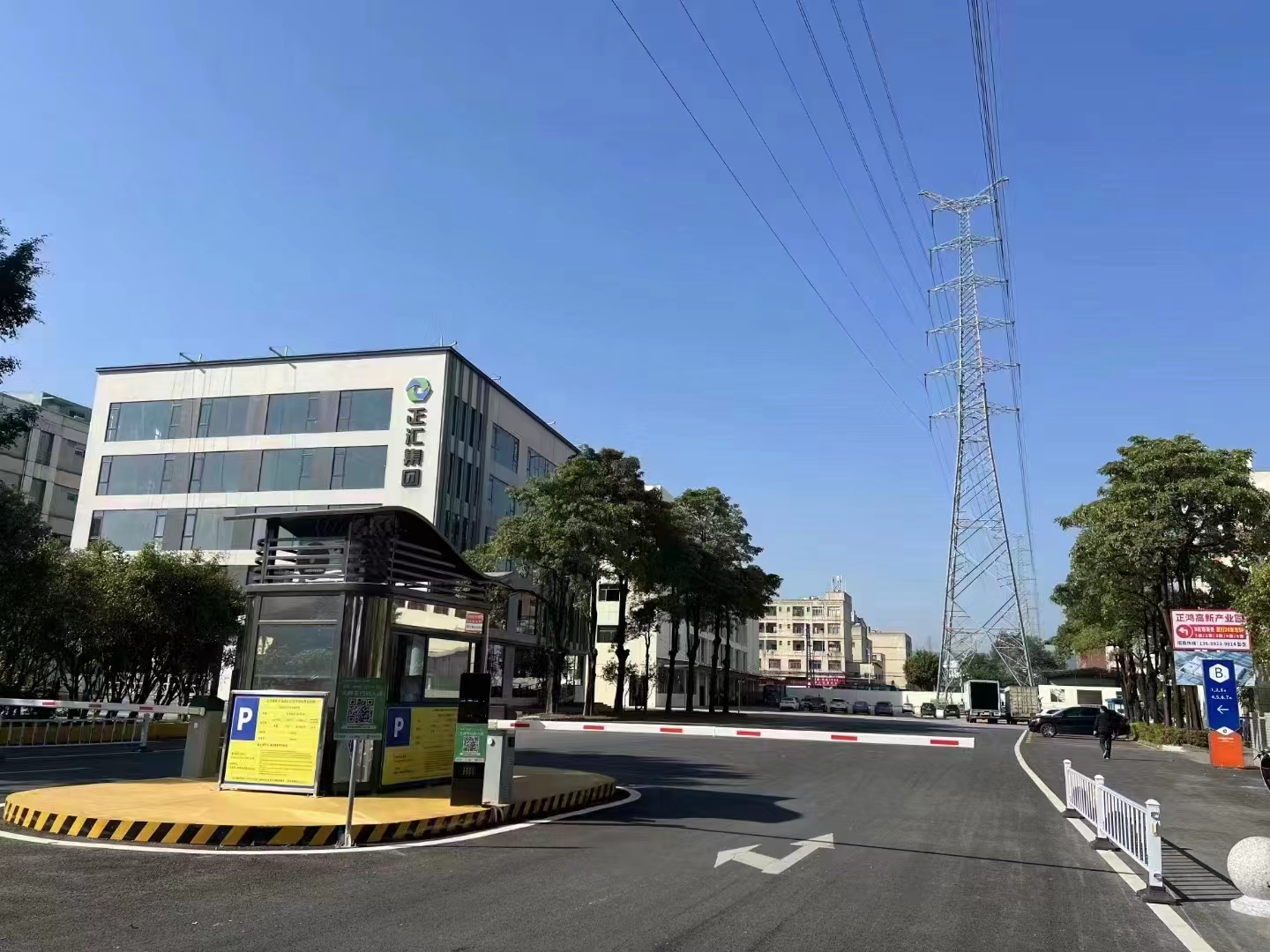
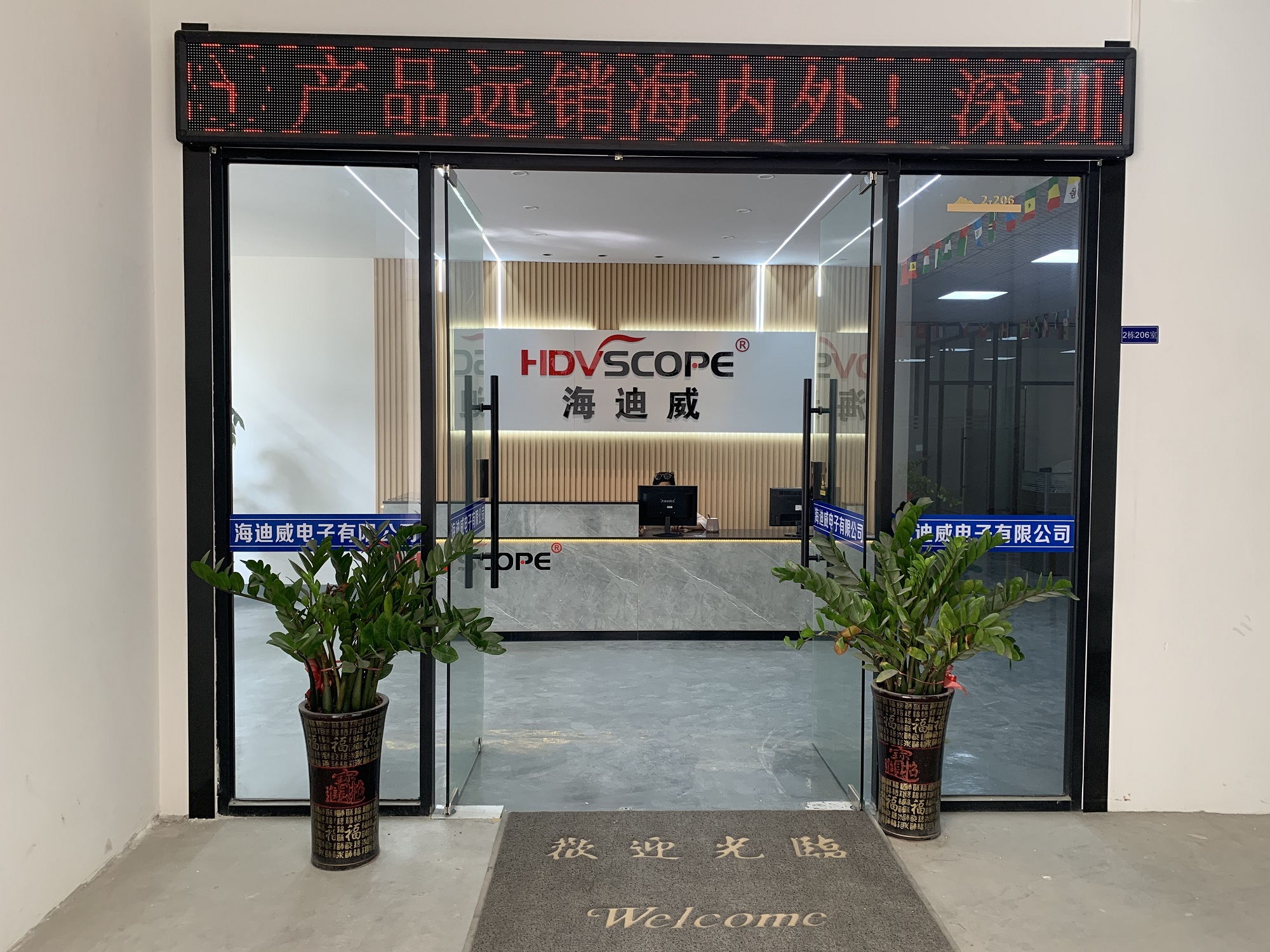
At Shenzhen Brekta Electronics Co., Ltd., we have been building exactly this class of board for more than 13 years. Our engineering team designs directly in Protel and Allegro, our branch facility in Dongguan runs the SMT and assembly lines, and our 51–100 person team ships to long-term partners across North America, South America, Europe, the Middle East and Asia. Everything below is written from that operating reality — not from a spec sheet.
Quick answer for buyers: a 38x38mm IP camera module is a network camera board on a 38 × 38 mm PCB that outputs H.264/H.265 video over RTSP, ONVIF or (optionally) PoE. Brekta ships standard versions from 1 pc with CE/FCC/RoHS documentation and a 24-month warranty, and offers full OEM customization of sensor, lens, firmware, branding and packaging.
The anatomy of a 38x38mm IP camera module
A 38x38mm IP camera module is best understood as the "brain + eye" of a networked camera. Every Brekta board carries four layers of engineering:
- Image sensor & ISP. From 1 MP OmniVision sensors to 6 MP Sony Starvis units (IMX335, IMX307, IMX291 class), matched to an ISP pipeline tuned for WDR, 3D noise reduction and low-lux performance.
- Video encoder. H.264 for universal NVR compatibility, H.265 / H.265+ for bandwidth savings of 40–50% at equivalent quality — critical on 4 MP and 6 MP designs.
- Network interface. 10/100 Mbps Ethernet, RTSP streaming, ONVIF Profile S compatibility and P2P for consumer-friendly deployment. PoE (IEEE 802.3af) is optional on selected models for one-cable installs.
- Peripheral ports. M12 lens mount, IR-cut filter, optional microphone, TF card slot for edge recording, and a UART/USB port for on-site maintenance.
Which 38x38mm IP Camera Module Should You Shortlist?
Three families cover the vast majority of requests we receive from procurement teams. Rather than listing dozens of SKUs, we shortlist by application so buyers can focus cost negotiation on the right class of product.
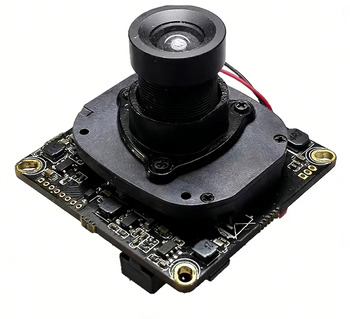
38×38 mm IR-Cut 1080P IP Camera Module
- 720P / 960P / 1080P options
- H.265, P2P, night vision
- Gesture / eye-tracking ready
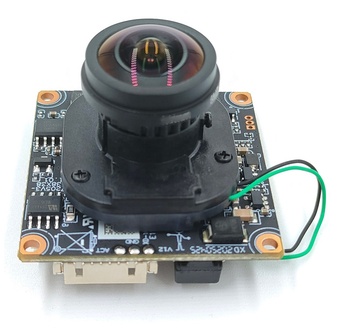
6MP 38×38 mm Blacklight IP Camera Board
- IMX335 CMOS, H.265+
- 1.7 mm fisheye 180°
- RTSP, CGI, PoE optional
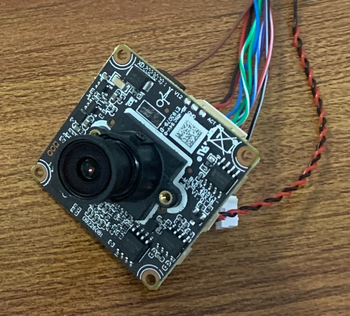
6MP Low-Light IP Camera Module, PoE
- 2.8 mm fixed board lens
- CGI integration
- Up to 128 GB TF optional
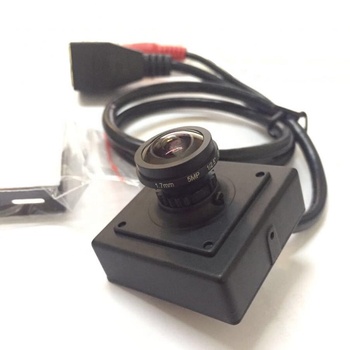
5MP 0.0001 Lux Square Mini PoE IP Camera
- IMX335, H.265+/H.264
- 1.7 / 1.78 mm wide angle
- MOQ 2 pcs
38x38mm IP Camera Module Procurement Trends for 2025 and Beyond
The questions our buyers ask have changed noticeably over the past three years. What used to be "how many megapixels?" is now "how much storage per site?" and "can it run on the NVR we already own?" These are the five procurement trends we expect to shape 38x38mm IP camera module sourcing in 2025 and 2026.
1. H.265 becomes the default, not the upgrade
On 4 MP and 6 MP 38x38mm IP camera modules, H.265 / H.265+ now saves 40–50% of bitrate versus H.264 at comparable perceptual quality. Every integrator running multi-site deployments is doing the math on NVR capacity. For procurement teams, this means the practical question is not "do we want H.265?" but "do we still need H.264 fallback for legacy NVRs?" Brekta boards are typically dual-codec so both audiences are covered.
2. Low-lux becomes non-negotiable
Across retail, ATM, kiosk and smart-building segments, the lights are usually off when something goes wrong. Starvis-class sensors — IMX291, IMX307, IMX335 — have moved from premium feature to baseline requirement on 38x38mm modules. Procurement teams increasingly request 0.001–0.01 lux performance documented in writing before issuing a purchase order.
3. PoE consolidation reduces install cost
PoE 802.3af on a 38x38mm IP camera module lets integrators run a single cable per camera, cutting install labor by 15–25% on an average project. For 2025, we are seeing PoE move from optional to default on our 4 MP and 6 MP line, with H.264-only models keeping a passive PoE option for price-sensitive bids.
4. Firmware and SDK requirements push up the MOQ
Buyers no longer want only a board — they want RTSP path control, ONVIF profile tuning, OSD strings, boot logos and AI trigger hooks. Every customization adds engineering hours and moves the practical MOQ from 1–10 up to 100 pieces for complex firmware work. Procurement teams should plan for this earlier in the cycle.
5. Documentation is part of the product
CE, FCC and RoHS certificates, a stable firmware changelog and a live technical contact are now treated by serious buyers as part of the deliverable, not a favor. Brekta provides the standard documentation pack with every 38x38mm IP camera module order and offers DK/CN-stamped customs paperwork on request.
How the 38x38mm IP Camera Module Is Evolving Technically
If procurement trends describe where buyers are going, technical evolution describes what the boards will be capable of. Here are the four shifts we are engineering around in our own R&D pipeline.
From megapixel race to image quality race
The megapixel sticker price of 8 MP+ boards has fallen sharply, but the visual difference between 4 MP and 8 MP is marginal inside compressed streams. What buyers actually value in 2025 is dynamic range, noise floor and color metamerism under mixed LED / fluorescent light. Our engineering time has shifted accordingly: tuning the ISP for realistic skin tones and clean night scenes now matters more than increasing pixel count.
Edge AI moves into the 38x38mm form factor
Small NPUs and lightweight model accelerators now fit on the same 38 × 38 mm footprint, enabling on-board person detection, plate-read for parking lots in ATM kiosks, or loitering alerts at retail entrances. For integrators, the benefit is reduced bandwidth and reduced server cost. Brekta is actively developing AI-ready 38x38mm boards with our firmware partners; sample units ship to qualified OEM projects on request.
On-board recording becomes standard
A TF card slot on the 38x38mm IP camera module lets the board keep recording through brief network outages. In a self-service kiosk or a remote ATM, this is the difference between "we have footage" and "we do not." On-board storage of 32–128 GB is rapidly becoming the requested default.
Upgradeable firmware ecosystems
Rather than a fixed firmware image shipped at order time, more buyers want an update channel: an SDK, a device-side update endpoint and a documented protocol for boot logo and RTSP path changes. Brekta supports this via signed firmware packages and a lightweight OTA script integrators can host on their own servers.
Buyer's Guide: How to Choose the Right 38x38mm IP Camera Module
The table below is drawn from the questions our engineers answer most often during project reviews. It compresses the "which sensor, which lens, which interface" decision into a single page that a procurement manager can forward internally.
| Question | What to decide first | Watch out for |
|---|---|---|
| Resolution | 2 MP is enough for most ATM / kiosk. 4–6 MP for corridor ID and face capture. | Higher MP demands more bitrate and CPU on your NVR. |
| Sensor | Starvis (IMX291/307/335) for low-lux; standard CMOS for indoor day-light use. | "0.001 lux" claims without specifying WDR and shutter speed. |
| Lens | M12 board 2.8–6 mm for wide general use; 1.7 mm fisheye for ceiling or door-eye. | FOV changed by lens choice, not sensor size, is a common mistake. |
| Codec | H.265 primary; H.264 fallback for legacy NVR estates. | H.265 requires decoding on NVR / VMS side. |
| PoE | Yes for single-cable installs; no if local 12 V is available. | PoE budget on your switch port must be verified. |
| Recording | TF card for outage resilience; NVR for central storage. | Retention policy and TF card class. |
| Firmware | Standard image for fastest shipping; custom for brand/OSD/RTSP integration. | Custom firmware adds 5–10 days and raises MOQ. |
| Certification | CE/FCC/RoHS documentation before PO. | Unregistered accessories may cause customs issues. |
Common Applications of the 38x38mm IP Camera Module
During Brekta's 13 years of manufacturing, the 38x38mm IP camera module has proven itself in a surprising range of end products. The most common categories:
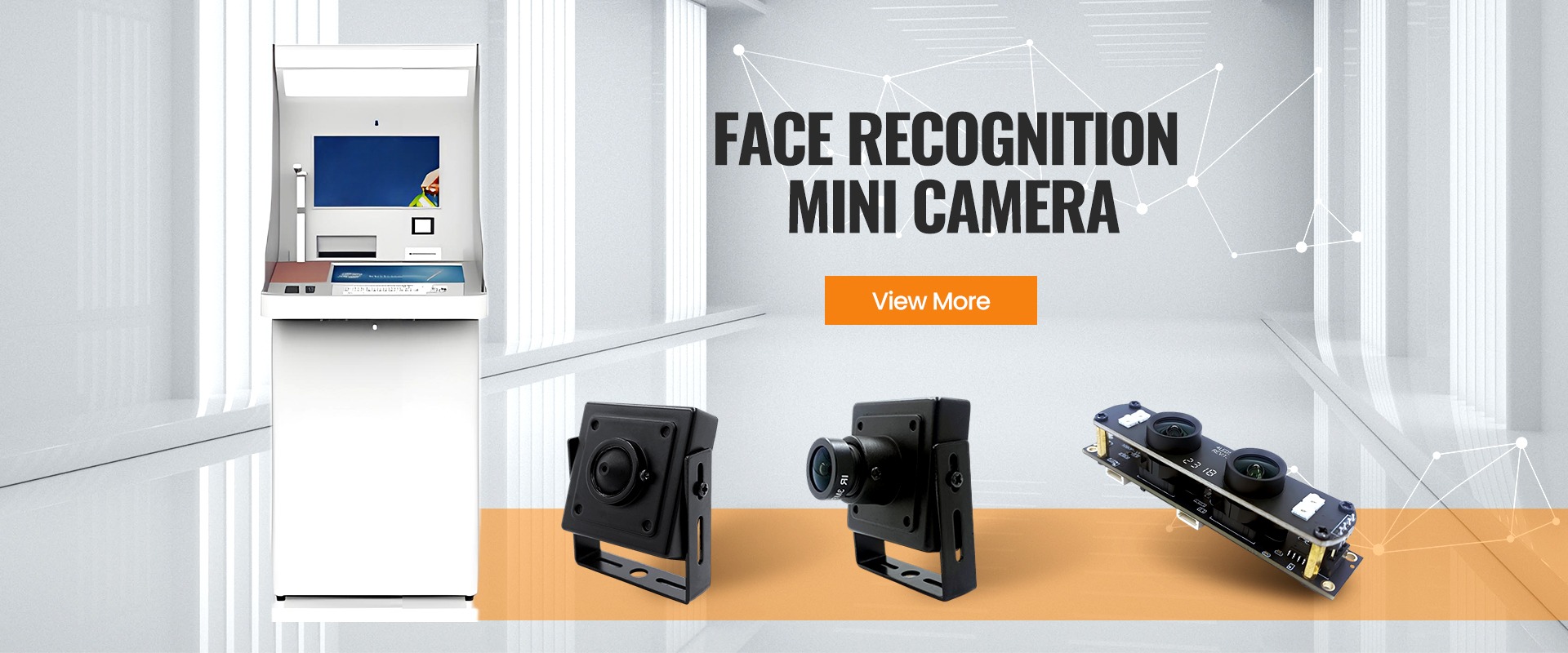
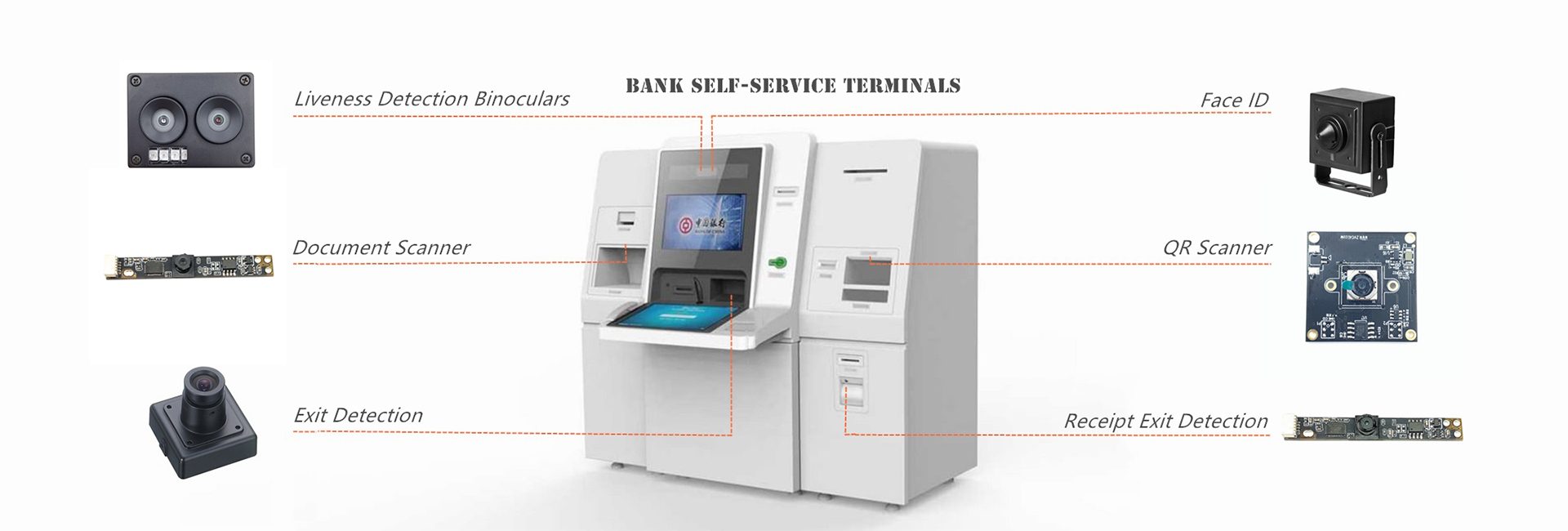
- ATM, VTM, CRS and self-service kiosks. Compact fascia-integrated camera for transaction recording and fraud prevention.
- Smart vending and lockers. Panoramic or fisheye boards for cabinet interior monitoring and remote stock checks.
- Retail and door-eye. Standard dome or covert CCTV designs with low-lux sensors and PoE.
- Industrial inspection. Boards used in machine cabinets, robotics and vision-assisted QC where a small networked camera is required.
- Smart-building security. Camera-in-elevator, camera-in-parking-meter, and camera-in-access-control panel designs.
How Brekta's Approach Adds Information Gain for Buyers
Most "IP camera module" pages online repeat the same spec-sheet material. A buyer evaluating 38x38mm IP camera modules gets more value from a page that answers questions the spec sheet does not. That is the design intent of this page and of every buyer's guide we publish.
Engineering-first content, not marketing-first
Every claim on this page — from the practical meaning of H.265 to the trade-off between PoE and local 12 V — is shaped by the engineers who design our boards. Our team uses Protel and Allegro daily, works with Starvis, OmniVision and Himax sensor families, and debugs the same integration issues buyers face when deploying into machines. This "experience" and "expertise" is what E-E-A-T is meant to signal to both buyers and search engines.
13 years of manufacturing evidence
Brekta has been in business since 2012, based in Shenzhen with a Dongguan branch. We are a manufacturer, not a trading company: incoming materials are inspected before assembly, every finished unit is image-tested by QC, and our annual revenue in the US$5M–US$10M range reflects consistent volume with long-term partners in North America, South America, Europe, the Middle East and Asia.
Documentation buyers can hand to their compliance team
CE, FCC and RoHS certificates are issued with every order. We ship with a 24-month warranty, offer free warranty replacement and lifetime technical support, and respond to project emails within roughly 2 hours during Shenzhen working hours (Mon–Sat, 09:00–18:30 GMT+8). Buyer reorder rate — one measure of trust — sits at 13% for our account base.
OEM and ODM customization without the usual opacity
Our OEM service menu is explicit: board size, lens choice, connector and cable, IR-cut, microphone, firmware (OSD, RTSP path, boot logo, ONVIF profile), silkscreen branding and packaging. First-article samples typically dispatch in 5–10 working days; ongoing production uses the same QC line as the approved sample. This reduces risk on both sides of the deal.
Frequently Asked Questions from Global Buyers
These are the questions our sales engineers answer most often about the 38x38mm IP camera module. If your question is not covered here, the fastest way to get an answer is to open the live-chat quote widget below.