WiFi Endoscope Camera with 10m Cable: The 2025 Buyer’s & Sourcing Guide
5MP autofocus probe, IP67 waterproof 10-metre cable, instant WiFi hotspot to Android & iOS — engineered and QC-tested in Shenzhen.
Every Probe Image-Tested Before It Ships
Incoming material inspection, 100% finished-unit QC, 24-month warranty and lifetime technical support.
1 m, 2 m, 5 m or 10 m — Your Cable, Your Brand
Probe diameter, autofocus optics, IR lighting, firmware naming and retail packaging customized to your project.
Why Global Buyers Search for a “WiFi Endoscope Camera with 10m Cable” in 2025
Search behaviour around inspection cameras has shifted noticeably over the past three years. Ten years ago, buyers typed broad terms such as “endoscope camera” or “borescope” and sorted through hundreds of near-identical listings. Today, the query pattern is far more specific. Purchasing managers, maintenance contractors, tool distributors and private-label brand owners now search with the exact specification they need already embedded in the phrase — and “WiFi Endoscope Camera with 10m Cable” is one of the fastest-growing of these long-tail, high-intent searches.
That specificity is not accidental. It is how experienced buyers signal a complete shopping intent: they have already decided the camera must be wireless (no proprietary monitor, no phone-tethered USB-C dependency), and they have already calculated the reach they need for their real inspection environments. This guide is written from the perspective of a manufacturer that has supplied compact inspection and machine-vision cameras to integrators across North America, South America, Europe and the Middle East for over a decade — and it is designed to answer the questions that procurement teams actually bring to us during first contact.
What Exactly Defines a WiFi Endoscope Camera with a 10m Cable?
A WiFi endoscope camera is a compact inspection camera whose sensor head sits at the end of a flexible, semi-rigid cable. Instead of sending video to a dedicated handheld monitor, it broadcasts a live stream over its own 2.4 GHz WiFi hotspot, which a smartphone or tablet joins directly. No router, no internet connection and no account are required. The “10m cable” in the product term is the decisive specification: it defines how deep the probe can travel into walls, ductwork, drain lines, engine bays, storage tanks, HVAC plenums, marine hulls or industrial piping before the operator runs out of reach.
In practical sourcing terms, four attributes matter most when a buyer specifies this product:
- Probe reach and flexibility. A 10-metre cable must remain pushable around one or two gentle bends without kinking. Cable stiffness, outer jacket material and the transition zone behind the camera head all affect how the tool behaves inside a real pipe.
- Image quality at the working distance. Resolution alone is misleading. Autofocus optics, a 1/4″ CMOS sensor, LED ring lighting and exposure control determine whether the operator can actually read a serial number or identify corrosion at three metres or eight metres.
- Wireless link stability. A hotspot that drops every few seconds is unusable on a job site. The streaming module, antenna placement and firmware buffering are the difference between a professional tool and a toy.
- Ingress protection. IP67 on the probe and cable is the practical minimum for drain, plumbing and tank inspection, where the camera head will routinely be submerged.
Product Recommendation: What to Look For in This Specific Configuration
Based on the project briefs our engineering team receives most often, a well-specified 10-metre WiFi endoscope should combine four subsystems that work together rather than four independent spec-sheet numbers.
1. Imaging: autofocus beats megapixels
A fixed-focus probe is only sharp within a narrow focal band — typically a few centimetres to a few tens of centimetres. With a ten-metre cable, operators inevitably inspect objects at wildly different distances in the same session. Autofocus optics solve this directly, and combined with a 1/4″ CMOS sensor and adjustable LED ring, they allow the same tool to read a nameplate at 20 mm and survey a tank interior at several metres. Our own 5MP autofocus WiFi endoscope is built around exactly this reasoning, and it is the configuration we recommend to buyers who cannot predict working distance in advance.
2. Cable: jacket, stiffness and strain relief
Ten metres of cable is a mechanical component as much as an electrical one. The jacket should resist oils, mild detergents and abrasion; the transition from probe head to cable should include proper strain relief because that is where most field failures originate; and the cable should coil without permanent deformation. Buyers sourcing for plumbing and drain applications should request a semi-rigid variant, while buyers sourcing for engine and cavity inspection often prefer a more flexible jacket with a shorter rigid tip.
3. Wireless module: hotspot behaviour on a real job site
The camera should create a stable 2.4 GHz hotspot with a practical open-air range of roughly 8–15 metres, which comfortably covers the ten-metre probe plus the operator’s working position. Dual-band support is valuable where 2.4 GHz is congested, and firmware that reconnects automatically after a phone sleeps is a small detail that separates professional tools from consumer gadgets. Where the deployment requires it, a USB fallback keeps the camera usable on a laptop even if the WiFi environment is hostile.
4. App ecosystem and firmware ownership
For distributors and private-label brands, the app ecosystem matters commercially. Generic apps are acceptable for unbranded tool sales, while OEM buyers often prefer a white-labelled application or a firmware build that carries their own naming and splash screen. Our team supports both paths, and we discuss app ownership explicitly during the requirement review rather than after the purchase order is signed.
2025–2027 Procurement Trends Shaping This Product Category
Procurement behaviour in the inspection-camera category is changing in ways that directly affect how buyers should structure their supplier relationships. Five trends stand out.
Trend 1: From catalogue buying to specification buying
Buyers increasingly arrive with a specification rather than a product name. They know the probe diameter, cable length, IP rating and app requirement they need. Suppliers who can respond to a specification with engineering depth — rather than simply quoting a stock SKU — win the order. This is why RFQs that mention “WiFi endoscope camera with 10m cable” are typically accompanied by a housing drawing, a target market and an estimated annual volume.
Trend 2: Consolidation of inspection tools into fewer, better platforms
Instead of buying a separate fixed-focus borescope, a separate USB endoscope and a separate WiFi unit, maintenance organisations are standardising on one wireless platform with interchangeable probes. For distributors, this means the winning SKU is the one that can be extended into a family — 1 m, 2 m, 5 m and 10 m variants, different probe diameters, autofocus and fixed-focus options — all from a single manufacturer with consistent firmware.
Trend 3: Private-label growth in tool distribution
Tool distributors, hardware chains and online brands increasingly want their own logo, packaging and app identity on inspection cameras rather than reselling a generic product. This shifts the supply relationship from transactional to partnership-based, and it rewards buyers who choose a manufacturer with genuine ODM capability. Once a private label is established, switching suppliers becomes expensive — so the initial due-diligence stage is where most of the value is created.
Trend 4: Certification and documentation as a gate, not a bonus
CE, FCC and RoHS documentation is now a baseline expectation in European and North American procurement, not a differentiator. Buyers should confirm that certification covers the exact configuration being purchased, including any white-label firmware, because a certificate issued for one variant does not automatically extend to a modified build.
Trend 5: Shorter development cycles and lower evaluation thresholds
Buyers want to evaluate before they commit. Suppliers who can ship an evaluation unit of a 10-metre WiFi endoscope in one to three working days, and who keep minimum order quantities low for the first order, are far more likely to be shortlisted than suppliers who demand a full container before a sample is released. Low-risk entry followed by volume ramp is now the default purchasing pattern.
Technology Trends Inside the Product Itself
The endoscope camera category is benefiting from the same sensor and connectivity advances that have transformed compact security cameras, and our company sits at that intersection.
- Better sensors at lower cost. The 1/4″ and 1/3″ CMOS sensors now used in 5MP inspection cameras would have been premium parts a few years ago. Improved quantum efficiency means cleaner images at lower illumination, which reduces LED power draw and heat at the probe tip.
- Autofocus as a standard, not a premium. As lens actuators have become cheaper and more reliable, autofocus is moving from flagship models into mainstream units — which is precisely why a 10-metre cable and autofocus optics are now commonly specified together.
- AI-assisted evaluation. Early-stage features include automatic defect highlighting, distance estimation and on-device annotation. These are still maturing, but buyers planning a two-to-three-year product roadmap should ask suppliers whether the platform is capable of firmware-level AI features in future revisions.
- Dual-output design. WiFi for field use plus USB for bench or desktop use is becoming a standard expectation, because it lets one tool serve both the field technician and the quality engineer at the workstation.
- Longer, smarter cable assemblies. Cable technology is improving alongside the electronics. Better jacket compounds, improved shielding and more robust strain relief are steadily extending the practical service life of 10-metre probes in demanding environments.
Frequently Asked Questions from Global Buyers
What is a WiFi endoscope camera with 10m cable actually used for?
Does the 10-metre cable reduce WiFi range or video quality?
Is the probe waterproof enough for drain and tank inspection?
Which devices can connect to the camera?
Can we customize cable length, probe diameter and our brand?
What certifications and warranty apply?
What is the MOQ and production lead time?
Why Buyers Source This Product from Shenzhen Brekta Electronics Co., Ltd.
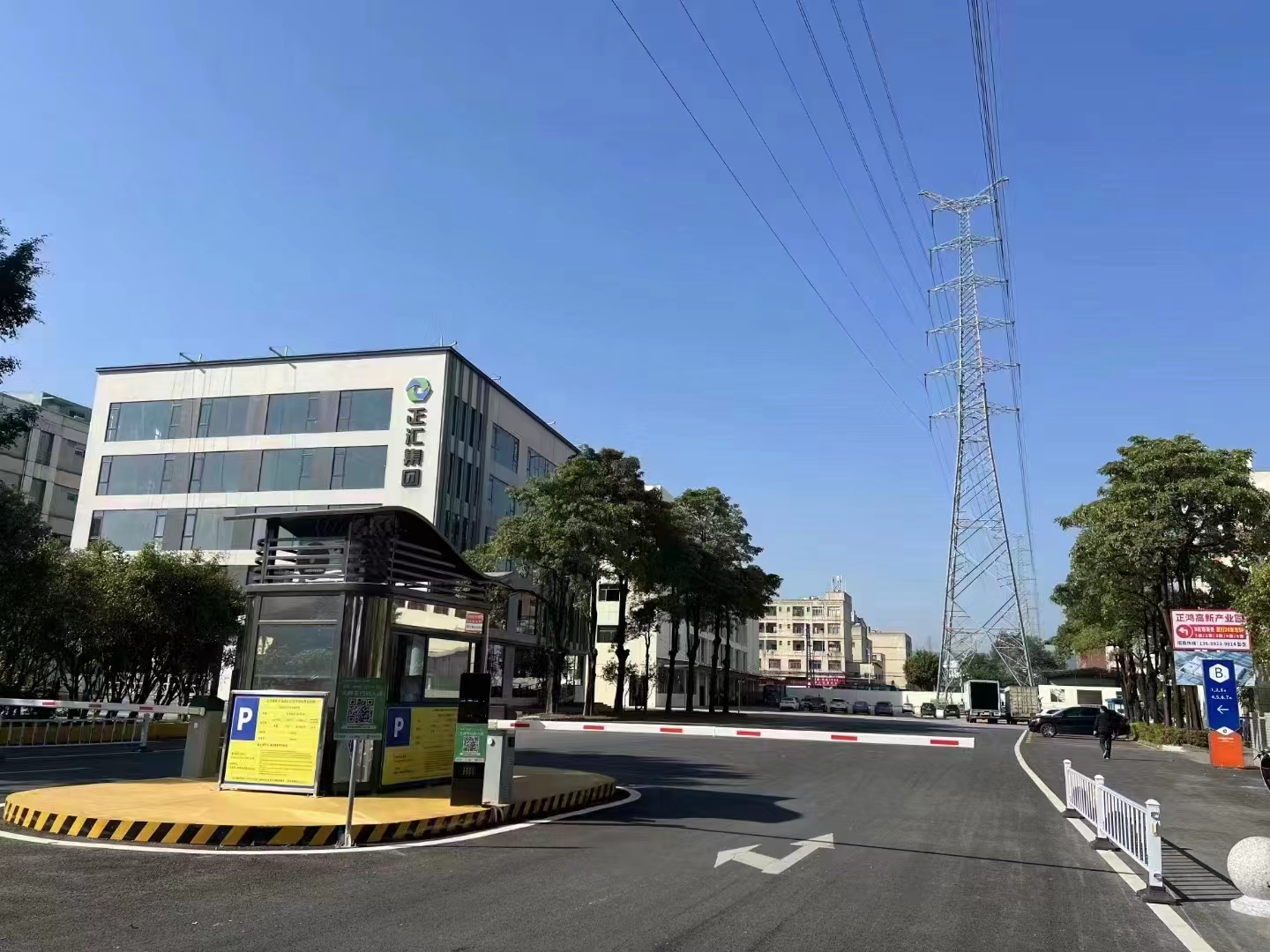
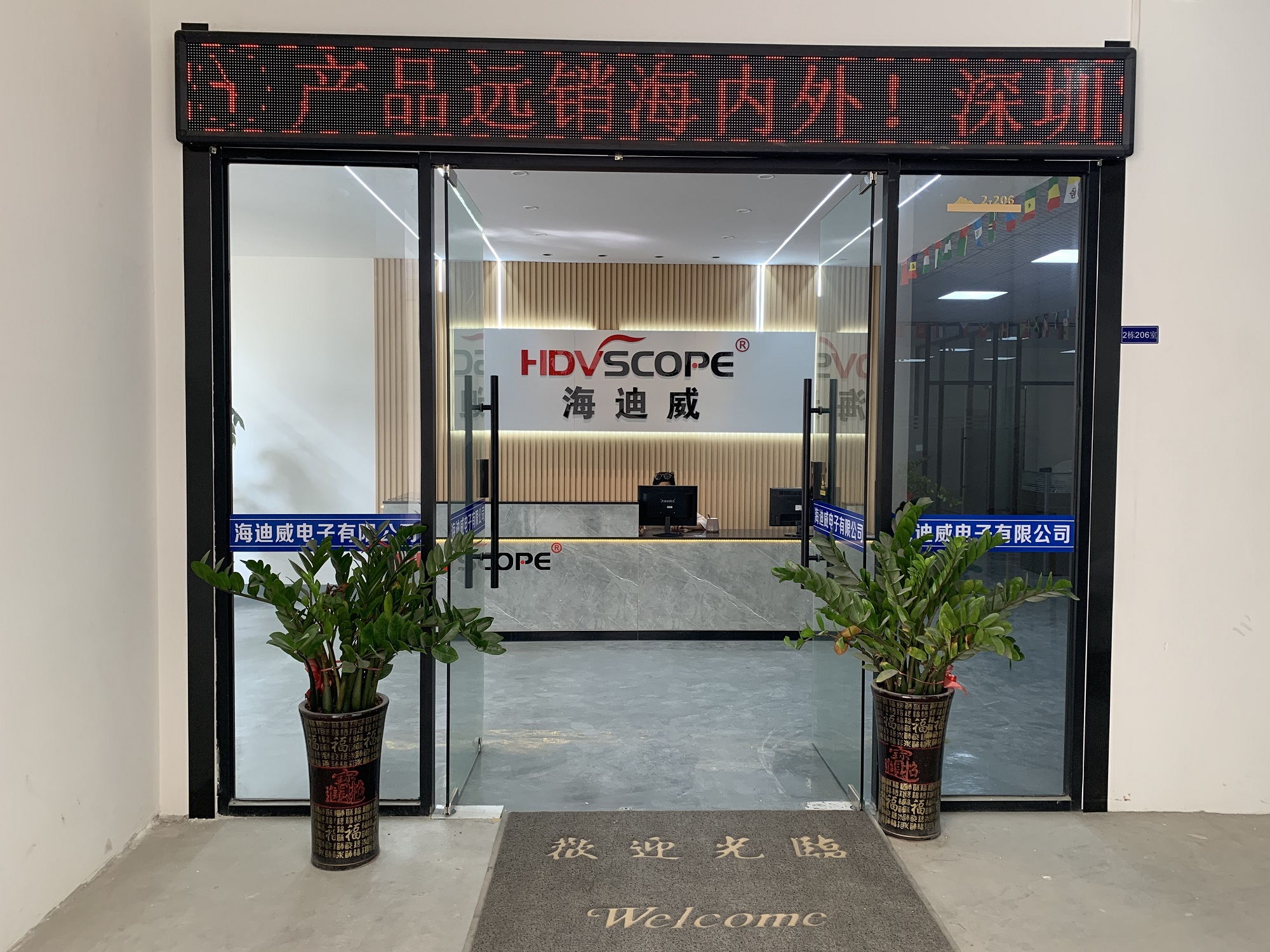
Shenzhen Brekta Electronics Co., Ltd. is a security and inspection equipment manufacturer headquartered in Shenzhen, Guangdong, with a branch in Dongguan. The company designs, researches, develops, manufactures and sells ATM and kiosk cameras, USB cameras, CCD cameras, IP cameras, AHD cameras, wireless cameras, smart-home cameras and inspection endoscopes. Our particular strength is miniaturisation: some of the smallest mini CCD cameras, mini USB camera modules, micro USB camera modules and mini IP camera modules on the market come from our engineering team, and the same compact imaging expertise underpins our WiFi endoscope platform.
We operate our own HDVSCOPE brand while supplying OEM and ODM customers worldwide. Long-term partners are located across North America, South America, Europe, the Middle East and other Asian regions. The team numbers between 51 and 100 people, annual revenue sits in the US$5–10 million range, and the company has been trading for more than thirteen years.
- Engineering depth: our engineers work in Protel and Allegro and can move from customer drawing to stable production hardware, including PCB layout, optics selection and firmware parameter adjustment.
- Quality control at every stage: all materials are tested before assembly and all finished products are tested by our QC team. Control covers material sourcing, processing, testing and packing — the reason our products carry CE, FCC and RoHS certification.
- Responsiveness: a 98.1% response rate and a typical reply time of two hours or less during working hours, with a maximum response time of two hours.
- Commercial flexibility: low minimum order quantities, 1–3 day dispatch on in-stock models, and a 13% buyer reorder rate that reflects repeat purchasing rather than one-off transactions.
- After-sales commitment: 24-month warranty, free warranty replacement and lifetime technical support.
Our stated aim is simple: to let customers be satisfied. We work on the principle that choosing Brekta means choosing a professional company, and we welcome partners at home and abroad to establish long-term cooperation and create a bright future together.
How to Evaluate a Supplier Before You Commit
Because the 10-metre WiFi endoscope is a tool that will be used in the field, supplier due diligence should test the things that fail in the field rather than the things that look good on a spec sheet. Four checks are worth building into every evaluation.
- Request an image at maximum working distance. Ask for sample footage captured at eight to ten metres, in low light, with the LED ring at a realistic setting. Resolution numbers cannot substitute for this.
- Ask about strain relief and jacket material. A supplier who can describe the transition zone construction and the jacket compound in engineering terms is a supplier who has thought about field failures.
- Confirm the certification scope. Verify that the certificate covers the exact configuration you are buying, including any white-label firmware or modified housing.
- Test the commercial responsiveness before the technical one. A supplier whose quotation process is slow and vague is unlikely to be precise during a production issue. Our own target is a two-hour reply, and that is a deliberate choice rather than a coincidence.
Ready to Evaluate the 10m WiFi Endoscope for Your Project?
Send us your housing size, target market, cable length and estimated annual volume. Our engineering-backed sales team will recommend a configuration, confirm certification scope and arrange an evaluation sample dispatch within one to three working days for in-stock models. You can also reach us directly at info@brektacam.com.
Inquire NowTell Us Your Probe Diameter and Cable Length — We'll Recommend a Module
Send your drawing or target specification by email. An engineer-backed sales team replies within two hours during working time.