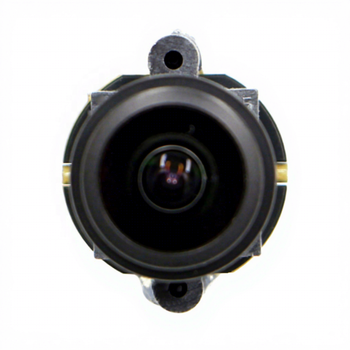
4MP Mini Bullet IP Camera Module: The Buyer's Question, Answered by the Factory
H.264/H.265, 25 fps, RTSP & ONVIF — a compact bullet-type network board engineered in Guangdong for OEM/ODM projects.
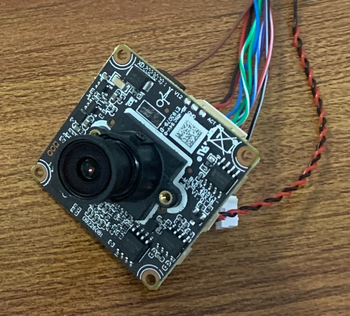
Starvis-Class Sensors for 24/7 Machines
0.0001 Lux options with WDR for dim lobbies, vending bays and night scenes.
Your Lens, Board & Firmware — MOQ from 1 pc
Free samples, 24-month warranty, lifetime technical support.
What Exactly Is a 4MP Mini Bullet IP Camera Module?
Before we talk about trends, let us define the product precisely — the way an engineer would, not the way a catalogue does.
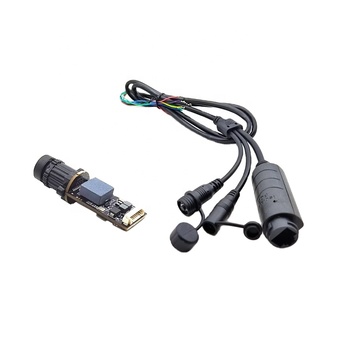
network resolution
A Bullet-Form Network Board, Not a Consumer Camera
A 4MP mini bullet IP camera module is a bare network camera engine — sensor, image signal processor, network SoC and lens holder — mounted on a compact board and housed in a slim cylindrical (bullet) form factor. It captures roughly 2560×1440 pixels, encodes video as H.264 or H.265 at 25 fps, and exposes the stream over IP using RTSP, ONVIF and P2P protocols. There is no app store, no cloud lock-in and no retail packaging unless the buyer requests it.
That distinction matters. Global buyers searching for a 4MP mini bullet IP camera module are usually integrators, kiosk builders, ATM manufacturers, NVR software vendors or private-label brands. They need a camera that drops into an existing enclosure and speaks to an existing video management system — not a finished consumer product. Every specification below is written from that integration perspective, drawn from the questions our engineering team answers in real project reviews.
- Resolution
- 4MP / 2560×1440
- Encoding
- H.264 / H.265, 25 fps
- Protocols
- RTSP · ONVIF · P2P
- Default Lens
- 8 mm M12 board lens
- Power
- DC 12V · PoE optional
- Order Entry
- MOQ from 1 pc
The Specifications That Actually Decide a Project
Most sourcing failures are not price failures — they are interface, thermal or lens mismatches. Here is what we check first with every buyer.
| Parameter | Typical Option | Why It Matters | Engineering Note |
|---|---|---|---|
| Sensor | 4MP 1/2.7" CMOS; Starvis variant | Sets dynamic range and low-light headroom | Choose Starvis if the scene drops below ~1 Lux |
| Encoding | H.264 & H.265, 25 fps | H.265 roughly halves bitrate for the same quality | Older NVRs may decode H.264 only — confirm first |
| Lens | 2.8 / 3.6 / 6 / 8 / 12 mm M12 | Determines field of view and identification distance | 8 mm is the default; 2.8 mm for wide interiors |
| IR-Cut | Mechanical IR-cut with dual filter | Keeps colour accurate by day, IR-sensitive by night | Mandatory if IR illumination is used |
| Power | DC 12V; PoE optional | PoE simplifies long cable runs | PoE adds board volume — verify kiosk clearance |
| Protocol | RTSP, ONVIF, P2P | Decides VMS and NVR compatibility | Share your VMS name and we will confirm the stream path |
| Board Size | Compact bullet board, ~38 mm class | Must fit the existing housing without redesign | Send an internal drawing; we check clearances before quoting |
Practical Integration Checklist
- Confirm decode support — H.264 vs H.265 at the NVR level.
- Measure the housing — length, diameter and lens clearance.
- Check the scene lighting — choose the sensor l