0%

A Micro Camera can fit beside a notebook, clip onto a small rig, or capture detail where a full-size camera feels cumbersome. Yet compact dimensions alone do not make a camera dependable. Buyers should compare image quality, lens coverage, stabilization, battery life, storage, and ease of setup. Small cameras can make compromises. Some are noticeable only after a few days of use.

Polaroid founder and imaging pioneer Edwin Land said, “An essential aspect of creativity is not being afraid to fail.” His words were not specifically about micro cameras, but they suit a careful buying process: test assumptions, not just specifications. A bright product photo cannot reveal weak low-light performance or a frustrating companion app. Real use can.

This guide reviews ten options for global buyers in 2026, with attention to practical differences and stated product capabilities. It also considers regional availability, warranty support, charging compatibility, and language settings where information is available. Check current specifications before purchasing; manufacturers can revise models and regional packages. A camera that suits travel may disappoint in a dim workshop. Personal needs still matter. Use every camera responsibly, respect people’s privacy, and check local rules before recording.
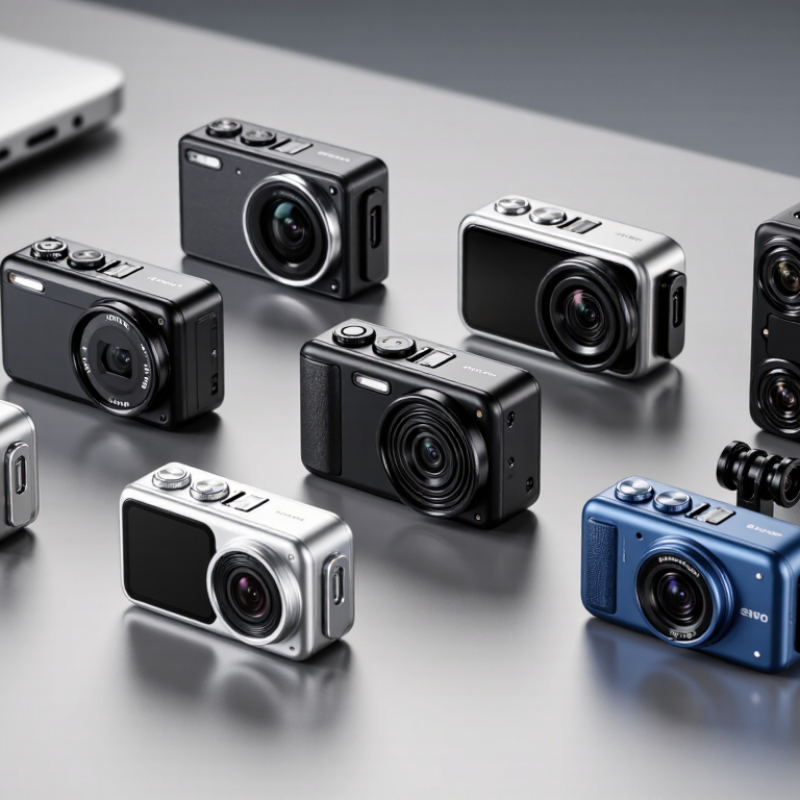
10 Best Micro Cameras for Global Buyers in 2026

What Defines a Micro Camera in 2026

What Defines a Micro Camera in 2026

“Micro camera” has no single industry-wide size or sensor standard. In practice, it describes a camera built for discreet portability: a compact body, low weight, and controls suited to quick setup. Tiny dimensions alone do not guarantee useful images. Sensor size, lens quality, stabilization, battery life, and heat management matter more when filming for longer periods. That label is useful, but imperfect.

The Camera & Imaging Products Association (CIPA) reported 8.49 million digital camera shipments worldwide in 2024. Its statistics cover digital cameras overall, not a separately defined micro-camera category. Buyers should treat “micro” as a product description, then compare measurable specifications. Check the stated sensor dimensions, recording limits, field of view, and whether the camera needs a phone or external monitor. A small camera may fit beside a key ring, yet still struggle in dim indoor light. Tiny does not mean effortless.

Tips: Ask for sample footage in daylight and low light. Check actual operating time, not just standby claims. Confirm how files transfer before buying. Specs can look tidy; real use is messier.

Key Types of Micro Cameras and Their Common Uses

Micro cameras fall into several practical types. Board-level modules fit inside robotics, laboratory instruments, and compact inspection equipment. Their small sensors can capture details in tight spaces, though dim lighting often produces grainy images. Handheld inspection cameras use narrow probes to examine pipes, machinery, or hard-to-reach cavities. A clear close-up matters more than a wide field of view. Wearable and action-style micro cameras suit field documentation, sports, and hands-free training. They need secure mounting, stable footage, and enough battery life for a full task.

Industrial vision is another major use. Grand View Research valued the global machine-vision market at US$19.6 billion in 2023 and projected an 8.5% compound annual growth rate from 2024 to 2030. This broader market includes systems beyond micro cameras, but it signals demand for automated inspection and measurement. In practice, buyers should compare resolution, frame rate, lens focus, heat management, and image quality under actual working light. Tiny is not always better. A smaller body may limit cooling or lens choice, and specifications alone rarely reveal that trade-off. For shared or public spaces, clear notice and privacy-conscious placement matter as much as image quality.

How to Evaluate Micro Cameras for Global Markets

Evaluating a micro camera for global markets starts with its real operating conditions, not its smallest advertised dimensions. Check image quality in low light, focus speed, battery life, and heat during continuous recording. A camera that fits beside a coin may still produce noisy footage in a dim shop. Test sample clips on a large screen.

CIPA’s 2024 camera shipment statistics recorded about 8.49 million digital cameras shipped worldwide, up from about 7.74 million in 2023. These figures cover digital cameras broadly, not micro cameras alone, so they indicate market context rather than demand for a specific size. Buyers should also assess charging compatibility, interface languages, local support, and whether included accessories work across target regions.

Small details matter. Check file formats, timestamp settings, memory-card access, and operating performance across expected temperatures. Review published specifications, then verify them with repeatable tests using the same lighting and recording duration. An IP rating can clarify resistance to dust or water, but it does not guarantee every real-world outcome. I would still question any claim based only on a short demonstration. Compare total cost, including replacement batteries and service, before choosing a model for multiple markets.

How to evaluate: Sensor area is one useful comparison point: larger sensors can gather more light, but image quality also depends on lens, processing, and shooting conditions. Values are calculated from representative sensor dimensions; actual dimensions can vary by model and manufacturer. Sensor-format names such as “1-inch” are not literal measurements.

10 Best Micro Cameras for Global Buyers in 2026

Choosing among the 10 best micro cameras for global buyers in 2026 means looking beyond body size. A pocketable camera should still offer steady handling, clear menus, and controls that work with cold or damp fingers. Check charging options, plug compatibility, language settings, and the cost of replacement batteries before ordering. Small matters. So does support: warranty coverage and repair access can vary by country.

CIPA’s 2025 shipment report recorded about 8.5 million digital cameras shipped worldwide in 2024, roughly 10% more than in 2023. This measures the broader camera market, not micro cameras alone, so it should not be read as proof of a tiny-camera boom. Trade-offs show up fast. A smaller body may mean fewer direct controls, shorter battery life, or less comfortable grip during a long walk. Compare image stabilization, sensor size, and charging method against your actual use, such as indoor family photos or travel at dusk. I would also check sample images at full size; screen previews can hide noise and soft detail. No single model fits every region or hand.

What to Check Before Buying a Micro Camera Internationally

Before ordering a micro camera abroad, check its exact dimensions, sensor resolution, storage type, and charging input. A familiar-looking plug does not guarantee compatible voltage. Confirm the charger’s input range, then check whether memory cards are included or sold separately. On a small desk, a camera with a bright status light may be more distracting than its product photos suggest. Small details matter.

Check delivery estimates, return costs, warranty coverage, and whether the companion app is available in your region. The 2024 Data Breach Investigations Report found that stolen credentials were involved in 24% of breaches. That finding is not specific to cameras, but it makes account security worth checking: look for regular firmware updates, unique passwords, and clear controls for cloud storage. Ask the seller who handles repairs if the camera arrives with a faulty battery or lens. International returns can be slow and expensive. I still find this easy to overlook. Also verify local requirements for wireless devices and imported electronics before paying, since specifications and support can vary by destination. Test it early.

10 Best Micro Cameras for Global Buyers in 2026 — What to Check Before Buying a Micro Camera Internationally

A practical comparison of compact camera categories. Specifications are typical ranges, not guarantees; features vary by model and generation.

Rank Camera Type Typical Sensor Typical Photo / Video Capability Best Suited To International Buying Checks
1 Pocket camera with a 1-inch sensor 1-inch-type sensor Often around 20–24 MP; many models record 4K video, with frame-rate limits depending on the model. Travel, everyday photography, and low-light use where a genuinely pocketable body matters. Check the lens range, regional warranty, menu languages, charging method, and whether the quoted video mode is available in your region.
2 Compact Micro Four Thirds interchangeable-lens camera 17.3 × 13.0 mm Four Thirds sensor Commonly about 16–25 MP; 4K recording is available on many models. Buyers wanting a small camera body with interchangeable lenses and more control over depth of field. Confirm the lens mount and included lens, regional service coverage, and whether the body includes a charger or only USB charging.
3 Compact APS-C mirrorless camera Usually about 23.5 × 15.6 mm; dimensions vary slightly by sensor format. Often around 20–33 MP; video commonly includes 4K, with recording limits and frame rates varying by model. Travel and creator use when image quality and interchangeable lenses are priorities over minimum size. Check total kit size with the lens attached, lens-mount compatibility, local warranty terms, and regional video-format specifications.
4 Pocket action camera Commonly a small sensor around 1/1.3- to 1/1.9-type; exact size varies. Typical models offer roughly 12–27 MP stills and 4K or higher video; stabilization and maximum frame rate differ by model. Sports, travel clips, cycling, and other situations involving movement or exposure to the elements. Verify the actual waterproof rating and required housing, battery availability, included mounting accessories, and local wireless-frequency compliance.
5 Modular action camera Often a small-format sensor; size and performance depend on the camera module. Common options range from 4K to higher-resolution video; still-photo resolution and stabilization vary by module. Flexible setups where a small camera unit can be mounted separately from its screen or battery module. Check which modules are included, whether connectors and accessories are sold in your destination, and whether the exact module is supported by the local app.
6 Wearable point-of-view mini camera Typically a compact sensor in the approximate 1/2.3- to 1/1.3-type range, depending on the design. Commonly 2.7K or 4K video; photo resolution and stabilization are model-dependent. Hands-free first-person footage, lightweight travel recording, and activities where a larger camera is inconvenient. Inspect the mounting system, recording-time limits, heat-management guidance, app availability, and local rules on recording people or private spaces.
7 Pocket 360-degree camera Usually uses two or more wide-angle camera modules; sensor sizes vary. Many models capture 360-degree video at approximately 5.7K to 8K; total still-image resolution is not directly comparable to a single-lens camera. Immersive travel footage and reframing a shot after recording. Check app and desktop-software availability in your country, export requirements, storage needs, lens-protection options, and regional cloud-service access.
8 Pocket camera with an integrated gimbal Often a small sensor around 1/1.7- to 1/1.3-type; specifications differ by model. Many record stabilized 4K video; some offer higher-resolution modes. Photo resolution and gimbal movement range vary. Walking shots, vlogging, and smooth handheld clips without a separate stabilizer. Confirm battery and charging details, included accessories, app compatibility with your phone’s operating system, and local warranty support for moving parts.
9 Rugged waterproof compact camera Frequently a small sensor around 1/2.3-type, though specifications vary. Often around 12–16 MP; video may range from Full HD to 4K depending on the model. Water activities, outdoor trips, and use where a sealed, durable body is more important than a large sensor. Read the exact depth, shock, freeze, and dust ratings; check whether seals require maintenance and whether warranty coverage includes water damage.
10 Embedded board-camera module Varies widely, commonly from small 1/4-type sensors to larger compact modules. Depending on the module, options range from a few megapixels to higher resolutions, with video from 1080p to 4K. Robotics, inspection, research, and custom embedded projects; generally not a ready-to-use travel camera. Check interface and driver support, lens and focus type, power requirements, export and import rules, and whether the module is intended for your application.

Before ordering internationally: Confirm the seller’s return address and warranty region; check that the supplied power adapter accepts your local mains voltage (or use a suitable certified adapter); verify plug type, charging standard, app availability, and wireless-band compatibility. Airline rules for spare lithium batteries vary, so check your carrier’s current requirements. Follow local privacy and recording laws.

FAQS

What should I check before buying a micro camera internationally?

Confirm its exact dimensions, sensor resolution, storage type, and charging input. Check whether a memory card is included.

Is a smaller camera always easier to use?

Not necessarily. A small body may have fewer direct controls, shorter battery life, or a less comfortable grip. Trade-offs show up fast.

How can I judge image quality before ordering?

Review full-size sample images. Screen previews can hide noise or soft detail. Compare stabilization and sensor size with how you plan to shoot.

What charging details matter when buying from another country?

Check the charger’s input range and plug compatibility. A familiar plug does not guarantee voltage compatibility.

What should I check about returns and repairs?

Confirm delivery estimates, return costs, warranty coverage, and who handles repairs. International returns can be slow and expensive. I still forget to check this.

How can I check whether the camera’s app and features will work for me?

Verify that the companion app is available in your region. Check language settings and local support before placing an order.

What account security features are worth reviewing?

Look for regular firmware updates, clear cloud-storage controls, and support for unique passwords. The breach statistic in the article covers all industries, not cameras specifically.

Does the 2024 camera shipment figure prove micro cameras are becoming more popular?

No. About 8.5 million digital cameras shipped worldwide in 2024, roughly 10% more than in 2023. That figure covers the broader camera market, not micro cameras alone.

Conclusion

This guide explains what defines a Micro Camera in 2026, including its compact size, practical features, and range of everyday applications. It compares common camera types and uses, from travel and personal documentation to creative projects and workplace tasks, then outlines how to assess image quality, battery life, storage, connectivity, durability, and ease of use. A curated selection of ten options helps global buyers compare different needs and budgets without relying on brand names.

Before purchasing internationally, readers should also check regional compatibility, shipping arrangements, warranty coverage, return policies, and any applicable import requirements. By weighing these factors alongside intended use, buyers can choose a Micro Camera that is reliable, suitable for their market, and well matched to their expectations.

Evelyn

Evelyn

Evelyn is a professional marketing specialist with a strong understanding of the company’s products, services, and the needs of the people they are designed to support. She regularly contributes expert articles to the company website, turning product knowledge and industry insights into clear,......