Executive White Paper: Sourcing CCTV Camera PCBA Solutions for Grodno's Industrial & Municipal Infrastructure
Grodno, serving as the economic engine of Western Belarus and a vital transport hub bordering Poland and Lithuania, demands specialized electro-optical equipment tailored to stringent regional conditions. As the regional industrial hub centered around the FEZ Grodnoinvest (Free Economic Zone Grodnoinvest) expands its automation footprint across chemical processing, heavy manufacturing, transit logistics, and automated municipal monitoring, regional system integrators and equipment manufacturers are shifting away from off-the-shelf consumer security cameras. Instead, the focus has pivoted toward direct procurement of high-reliability, board-level imaging modules—specifically UVC-compliant USB camera boards, RTSP/ONVIF IP camera PCBAs, and low-latency analog HD modules manufactured in China’s technology centers like Shenzhen and Dongguan.
This technical guide evaluates the engineering parameters, sensor architectures, environmental hardening practices, and supply-chain mechanisms required when importing Chinese CCTV camera PCBA hardware into the Grodno region. Through close collaboration with premier original equipment manufacturers (OEMs) such as Shenzhen Brekta Electronics Co., Ltd., Eastern European systems integrators can navigate complex local regulatory benchmarks (including EAC / TR CU standards), mitigate cold-weather optical degradation (-25°C to -30°C winter operation), and implement high-efficiency embedded vision architectures within ATMs, self-service kiosks, municipal transit fleets, and industrial automation assemblies.
Technical Gain Insight: Standard commercial camera modules frequently fail in Grodno's winter due to solder joint cracking, lens element fogging, and power IC thermal drift. Industrial-grade PCBAs utilizing multi-layer FR4 substrates (Tg170+), conformal anti-moisture coating, and wide-temperature DSP components are imperative for uninterrupted multi-year deployment.
Localized Camera Board Application Scenarios Across Grodno & Western Belarus
To successfully integrate Chinese camera PCBA technology into Grodno’s commercial and municipal hardware ecosystems, engineering teams must evaluate specific operational environments. Below are the primary regional application domains:
1. FEZ Grodnoinvest Industrial Automation & Automated Optical Inspection (AOI)
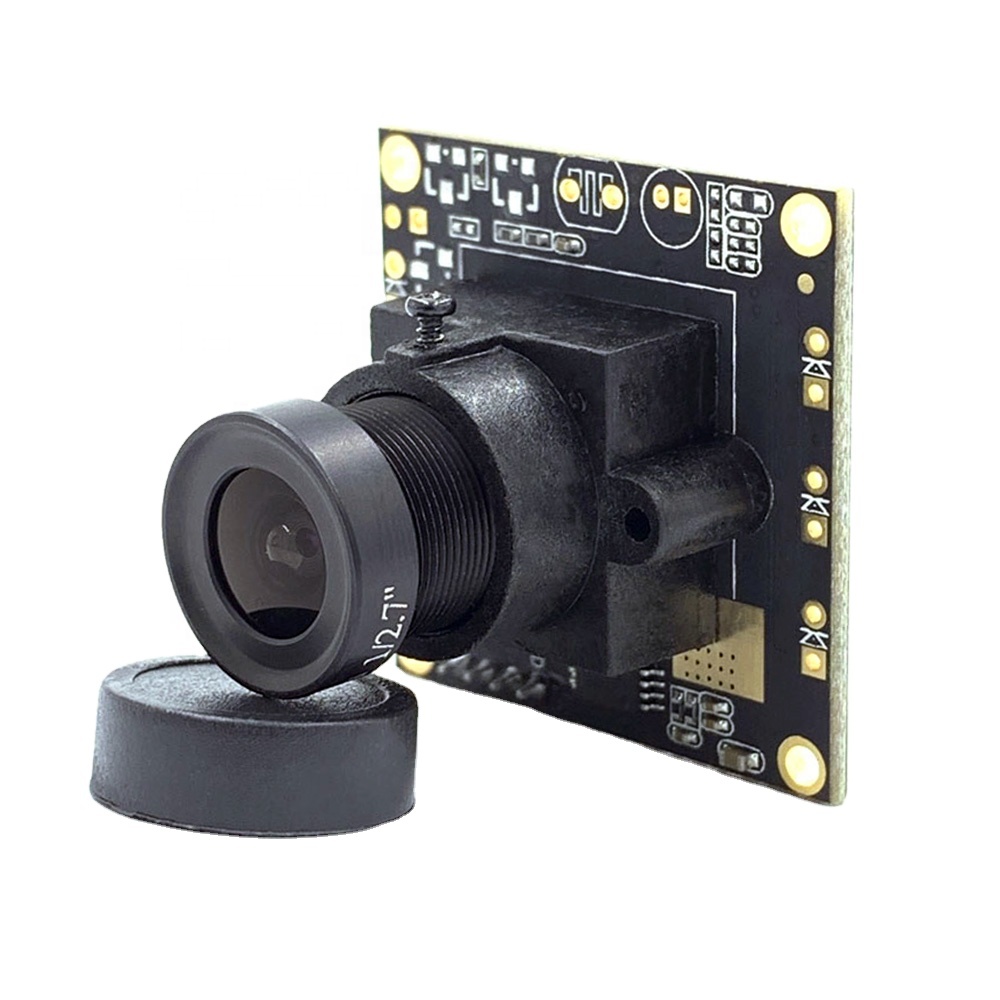
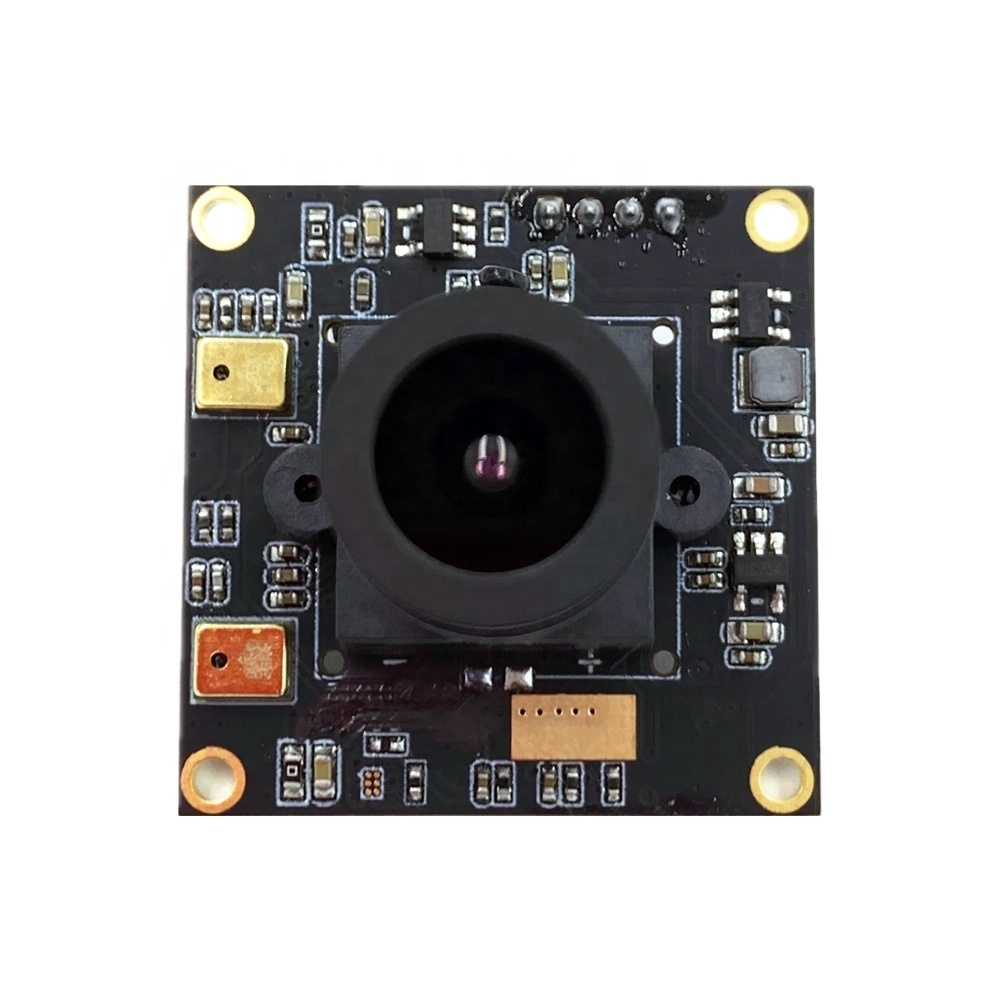
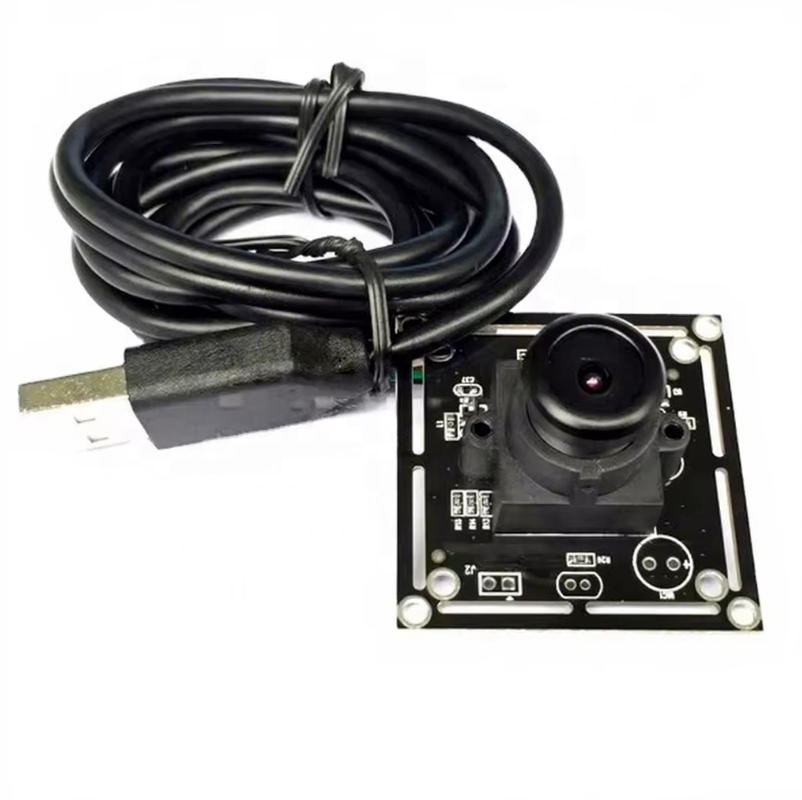
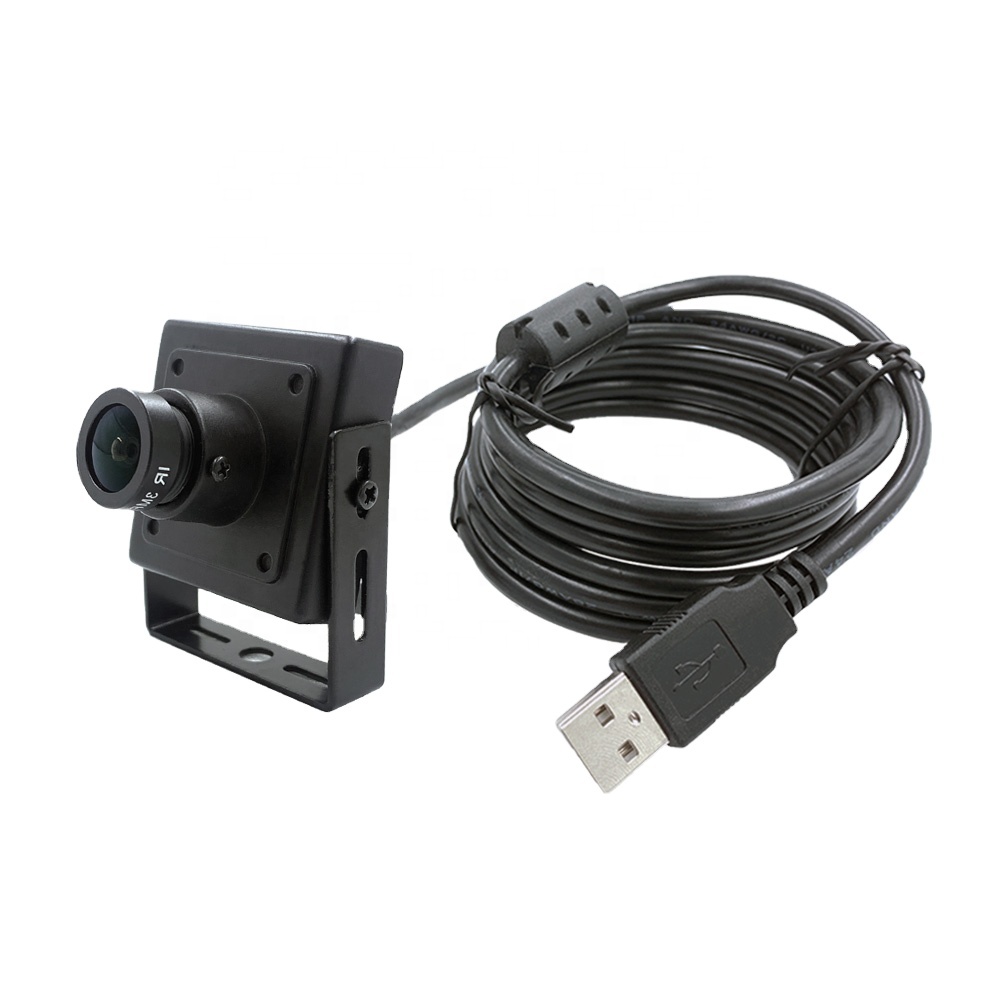
Within the Free Economic Zone Grodnoinvest, modern manufacturing facilities require high-resolution, low-latency vision boards for quality control, robotic guidance, and perimeter safety systems. Compact form factors such as 32x32mm and 38x38mm USB/IP board cameras equipped with high-speed CMOS sensors (such as OmniVision and Sony Starvis series) provide the primary vision feed for automated sorting equipment and chemical process monitoring. In these settings, high frame rates (up to 60fps at 1080P) combined with uncompressed YUY2 or MJPEG stream outputs allow edge controllers to execute machine-vision algorithms without processor bottlenecks.
2. Cross-Border Transport, Logistics Verification, & ANPR Corridors
Grodno’s position along major international rail and highway corridors (including the M6 highway linking Minsk to the Polish border) makes cargo inspection and Automatic Number Plate Recognition (ANPR) central to logistics security. Importers in Grodno utilize True WDR (Wide Dynamic Range >105dB) camera boards featuring Onsemi AR0230 or Sony IMX291 sensors. These modules effectively neutralize severe headlight glare and backlighting during twilight hours, capturing high-contrast imagery of vehicular license plates and container numbers under challenging Belarusian atmospheric conditions.
3. Municipal Transport & Belagroprombank / Belarusbank ATM Infrastructure
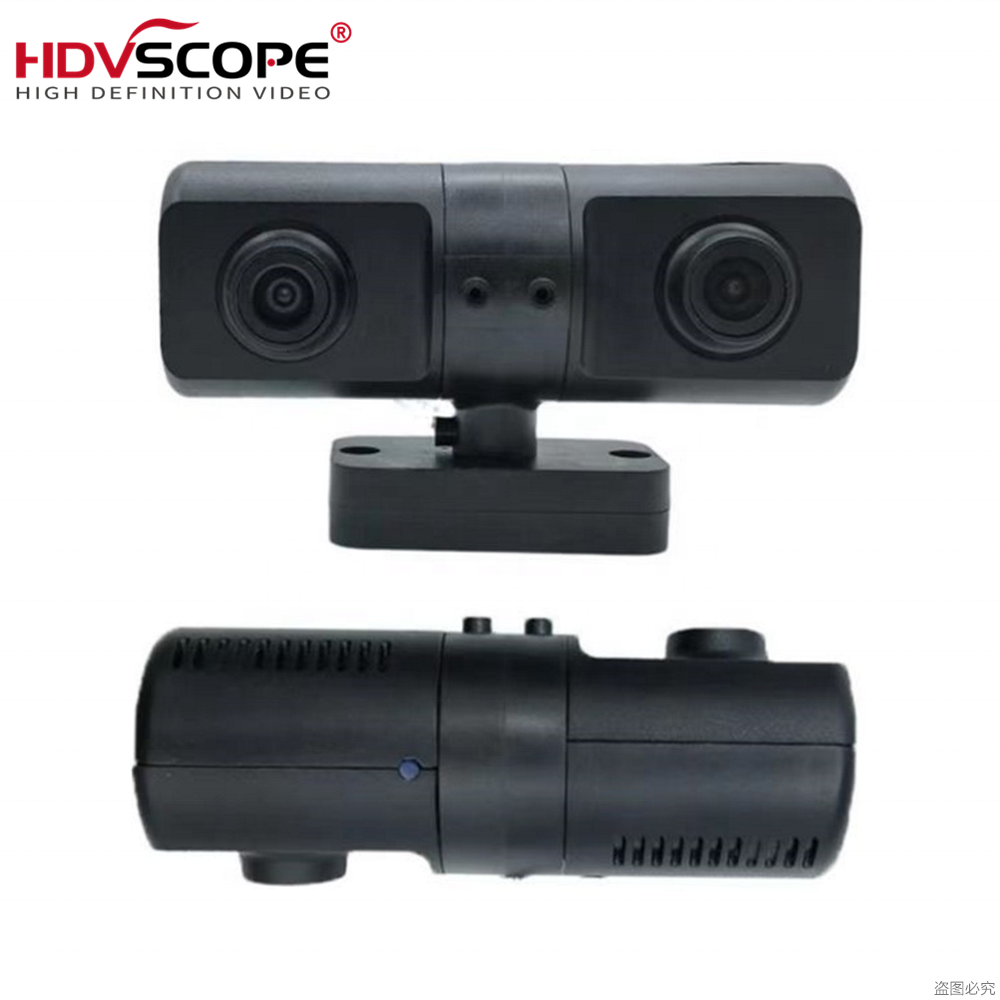
Financial institutions operating across Grodno, including major banking networks, depend on micro-sized camera boards for covert fraud monitoring and user authentication inside Automated Teller Machines (ATMs), Automated Deposit Terminals (ADTs), and Video Teller Machines (VTMs). Products such as 2.0MP pinhole USB camera boards and wide-angle 2.1mm Lenses fit neatly behind narrow bezel cutouts. Meanwhile, dual-lens modules combining standard RGB sensors with 850nm/940nm IR illumination enable liveness verification and biometric facial recognition, dramatically curtailing financial identity fraud.
4. Cold-Storage & Exterior Agricultural Surveillance
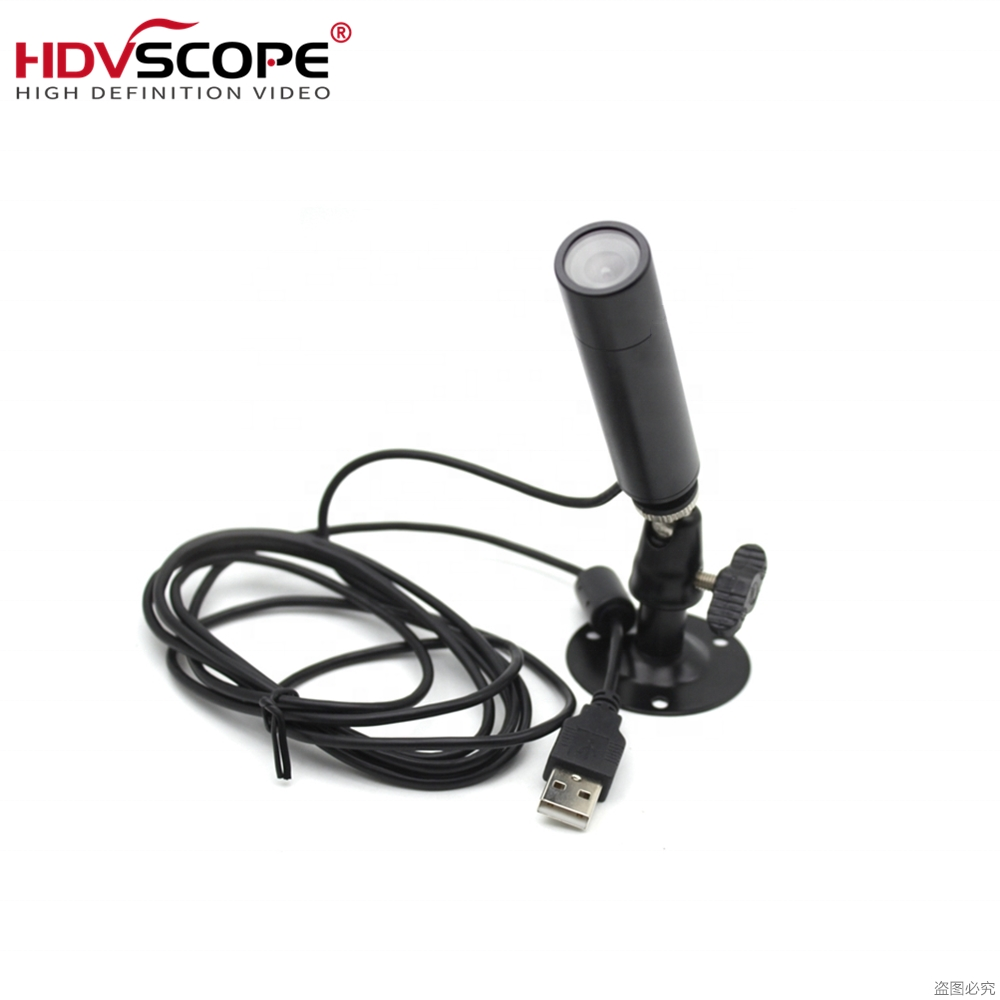
The agricultural and food-processing plants surrounding Grodno require vision modules that endure high humidity, wash-down routines, and freezing temperatures. Camera boards deployed in cold-storage units or exterior grain silos utilize industrial-grade thermal dissipation pads, low-lux starlight performance (down to 0.001 Lux), and sealed IP67 mini housings with 3.6mm or fisheye lenses, preserving image clarity despite severe ambient temperature swings.
Hardware Engineering Deep-Dive: Sensor Architecture, ISP Tuning, & PCB Durability
Procuring camera boards directly from a top Chinese exporter like Shenzhen Brekta Electronics ensures access to cutting-edge electro-optical components. However, system engineers in Grodno must specify the exact hardware parameters during the OEM request-for-quotation (RFQ) phase:
CMOS Image Sensor Matrix: Sony Starvis vs. Onsemi WDR
The underlying CMOS sensor determines the physical limit of dynamic range, light sensitivity, and color fidelity:
- Sony Starvis / Starvis 2 Series (e.g., IMX291, IMX335, IMX377): Utilizes back-illuminated pixel technology to achieve sensitivity extending into the near-infrared spectrum (NIR). These sensors excel in dim Grodno streetscapes and night monitoring, producing crisp color video at light levels down to 0.0001 Lux.
- Onsemi High Dynamic Range Series (e.g., AR0230): Employs multi-exposure frame combination at the pixel level to deliver hardware-level 105dB–120dB WDR. This prevents pixel saturation in high-contrast environments, such as lobby kiosks facing sunlit glass facades.
Image Signal Processor (ISP) & Firmware Customization
The ISP chip on the camera board translates raw sensor data into actionable video. Chinese manufacturers provide customized ISP firmware tailored to buyer requirements:
- 3D Noise Reduction (3DNR): Filters temporal image noise in low-light environments, dramatically lowering network bandwidth requirements for IP streams without introducing ghosting artifacts.
- UVC (USB Video Class) Standard Alignment: Guarantees plug-and-play driverless compatibility across Linux (Ubuntu, Debian, CentOS used in Belarusian industrial PCs), Windows, Android, and macOS ecosystems.
- Compression Codec Engines: Hardware encoding engines support multi-stream output in H.265, H.264, MJPEG, and raw YUY2 formats, allowing integrators to prioritize visual fidelity or network bandwidth efficiency.
PCB Board Layout & Physical Ruggedization
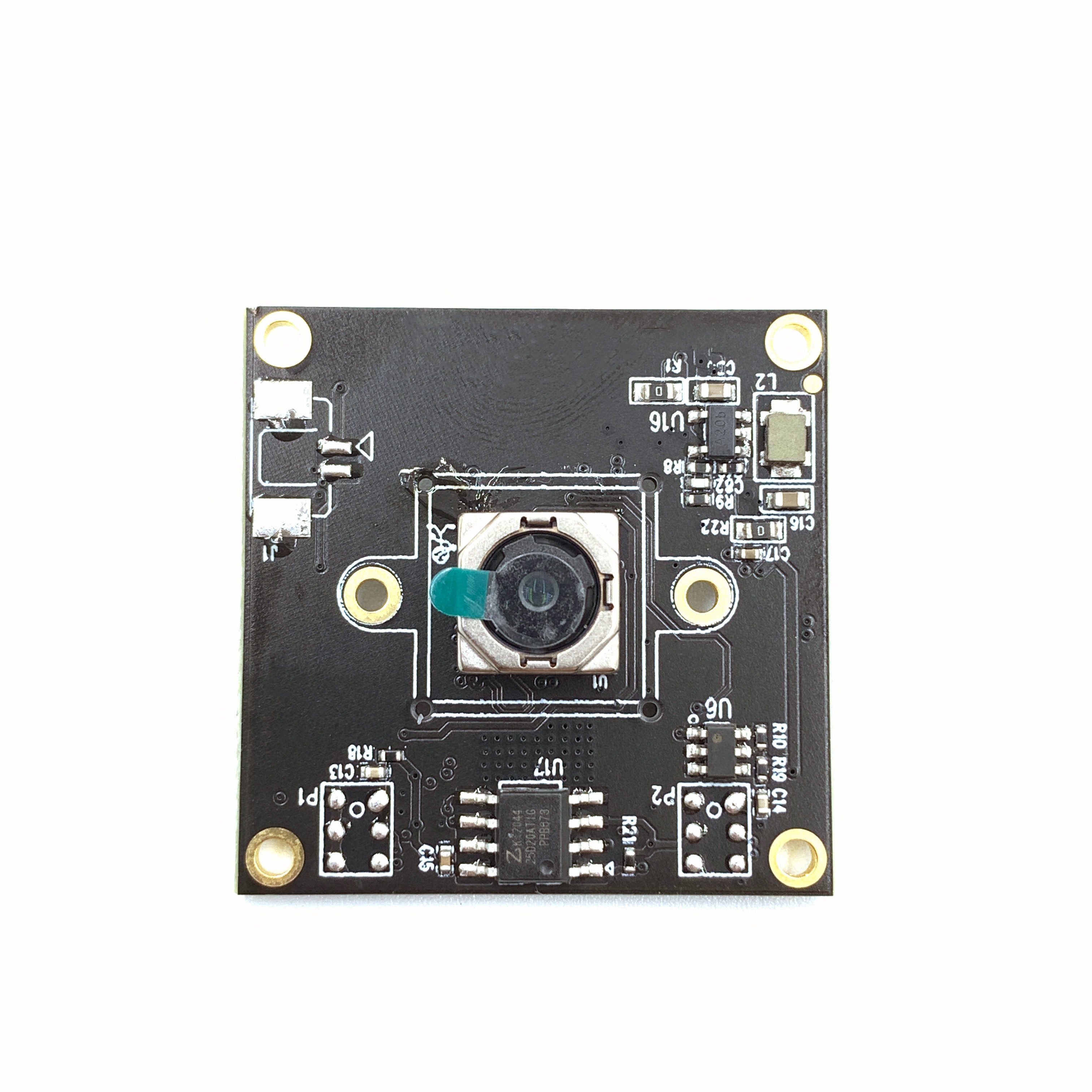
For long-term reliability in Eastern European installations, Brekta Electronics engineers PCBAs using 4-layer FR4 glass-reinforced epoxy laminate with high glass transition temperatures (Tg > 170°C). SMT assembly lines utilize SMT TVS diodes for Electrostatic Discharge (ESD) protection up to 8kV/15kV, shielding delicate IC chips against electrical surges common in industrial environments.
Engineering Specification Matrix: Selecting the Optimal Camera Board Interface
The table below provides a side-by-side technical evaluation of camera board protocols available for export from China to Grodno buyers:
| Bus / Interface Standard |
Data Bandwidth & Stream |
Max Cable Distance |
Target Grodno Application |
Engineering Considerations |
| USB 2.0 / 3.0 (UVC) |
Up to 480Mbps / 5Gbps (YUY2, MJPEG, H.264) |
3m - 5m (Direct USB); up to 50m with active extenders |
ATM Kiosks, VTMs, AOI Machine Vision, Document Scanners |
Zero driver installation; host CPU handles image decoding if raw YUY2. |
| IP / Network (RTSP / ONVIF) |
10/100M Ethernet (H.264 / H.265 Main Profile) |
100m (Cat5e/Cat6); kilometers over fiber converters |
FEZ Industrial Plants, Municipal Surveillance, Smart City |
Supports Power over Ethernet (PoE 802.3af); requires local IP network configuration. |
| Analog HD (AHD / TVI / CVI) |
Uncompressed Analog High Definition (1080P - 4K) |
300m - 500m over standard 75-3 Coaxial cable |
DVR Legacy Upgrades, Perimeter Fences, Heavy Vehicle Transport |
Near-zero latency transmission; requires DVR/encoder board for IP conversion. |
| HD-SDI / Ex-SDI |
1.485 Gbps / 2.97 Gbps Digital Uncompressed |
100m over RG6 Coaxial Cable |
Broadcast, High-End Medical, Real-Time Process Monitoring |
Extremely high video fidelity with zero latency; higher hardware component costs. |
| WiFi / Wireless (Tuya / iCSee) |
2.4GHz / 5.8GHz IEEE 802.11 b/g/n/ac |
15m - 30m indoors; line-of-sight depends on antenna |
Smart Home Peephole, Door Eye Security, Private-Label Retail |
Quick deployment; relies on local wireless spectrum stability and battery management. |
Regional Procurement Trends & Eurasian Economic Union (EAEU) Compliance
The import landscape in Grodno and the broader Belarus market is defined by evolving regulatory, economic, and trade dynamic changes. B2B buyers must account for the following factors when establishing supply lines with Chinese manufacturers:
EAC / TR CU Regulatory Framework
All electro-optical equipment imported into Belarus must comply with the Eurasian Conformity (EAC) regulations under the Eurasian Economic Union (EAEU). Specifically, camera PCBAs and embedded power supplies must adhere to TR CU 020/2011 (Electromagnetic Compatibility of Technical Means) and TR CU 004/2011 (On Safety of Low Voltage Equipment). Premier exporters like Shenzhen Brekta Electronics provide pre-tested CE, FCC, and RoHS test reports, significantly simplifying the issuance of local EAC Declarations of Conformity through accredited Belarusian testing laboratories.
Direct Logistics Corridors via China-Europe Railway Express
Grodno importers benefit immensely from direct rail freight connections. Utilizing the China-Europe Railway Express (Yiwu/Shenzhen/Chengdu to Brest/Minsk/Grodno route), bulk shipments of camera boards reach Belarusian customs checkpoints in approximately 14 to 18 days—substantially faster than maritime routes and far more cost-effective than air freight. Fast sample dispatches (1–3 business days via DHL/FedEx) allow engineers to validate PCBA prototypes before committing to rail-freight container orders.
Shift Toward Edge AI & Modular Hardware Component Upgrades
Integrators across Western Belarus are rapidly replacing monolithic camera units with modular PCBA boards integrated directly with Neural Processing Unit (NPU) single-board computers (such as Rockchip RK3588 or Raspberry Pi setups). This architecture permits local license plate reading, object classification, and face mask/helmet detection right at the edge in FEZ Grodnoinvest manufacturing hubs, drastically reducing cloud bandwidth dependencies.
Frequently Asked Questions for Grodno B2B Camera Board Buyers
How do Brekta camera boards perform in Grodno’s harsh winter temperatures?
Our camera PCBAs engineered for Eastern European export utilize industrial-grade components rated for operation between -30°C and +70°C. We apply conformal coatings upon request to protect surface-mount components against frost condensation, humidity, and atmospheric oxidation. Furthermore, we utilize low-temperature crystal oscillators to guarantee reliable cold-boot startups in sub-zero environments.
Are your USB camera modules driver-free on Belarusian industrial Linux setups?
Yes. All Brekta USB camera boards strictly comply with the standard UVC (USB Video Class) protocol. They operate seamlessly without additional driver installation across Linux distributions (Kernel 2.6.26 and higher), Windows 7/10/11, Android, and macOS. They are fully compatible with OpenCV, V4L2 (Video4Linux2), FFmpeg, and GStreamer framework pipelines.
What is the Minimum Order Quantity (MOQ) for evaluation samples shipped to Grodno?
We support engineering evaluation by offering an MOQ starting at 1 piece for all standard off-the-shelf camera board models. For custom OEM/ODM designs (such as custom PCB layout sizes, non-standard lens mounts, or specialized cable wiring harnesses), sample orders are quoted based on non-recurring engineering (NRE) requirements.
Can Shenzhen Brekta Electronics assist with custom PCB dimensions and lens selection?
Absolutely. Our in-house R&D engineering team utilizes professional CAD platforms (Protel, Allegro) to design custom PCBA geometries (e.g., 15x15mm micro square, 32x32mm, 38x38mm, or dual-sensor linear boards). We also offer customized M12, M8, CS-mount, or pinhole lenses with IR-cut filters tailored precisely to your field-of-view (FOV) and depth-of-field constraints.
What documentation is provided to support EAC certification and Belarusian customs clearance?
We supply a complete export documentation bundle including CE, FCC, and RoHS certificates of compliance, material safety datasheets, detailed engineering drawings, pinout schematics, and commercial invoices with accurate HS Code classifications (e.g., 8525.80) to facilitate seamless clearance at Brest or Grodno customs terminals.
What factory warranty and technical support terms do you extend to international B2B importers?
Every camera module manufactured by Shenzhen Brekta Electronics comes backed by a comprehensive 24-month factory warranty. We provide free component replacement for warranty claims, along with lifetime technical support directly from our senior hardware and ISP engineering team, with average query response times under 2 hours during operational hours.
Why Partner with Shenzhen Brekta Electronics Co., Ltd.?
Shenzhen Brekta Electronics Co., Ltd. stands as a premier manufacturer and exporter of compact, high-performance CCTV camera boards and vision modules in China. Operating state-of-the-art production facilities in Shenzhen and Dongguan, Guangdong, our enterprise combines 13+ years of specialized optical engineering with rigorous quality management systems.
Core Manufacturing Strengths:
- In-House R&D & CAD Mastery: Our engineering division utilizes advanced PCB layout software (Protel, Allegro) to design high-density 4-layer and 6-layer camera boards engineered for optimal Signal-to-Noise Ratio (SNR) and thermal efficiency.
- Dust-Free Cleanroom SMT Lines: Optical sensor placement and lens focusing take place within class-10,000 dust-free cleanrooms, preventing dust contamination on optical glass or sensor cover plates.
- 100% Dual-Stage Optical Testing: Every completed camera board undergoes automated optical inspection (AOI) followed by manual 4K chart focus adjustment and burn-in chamber stress testing prior to packaging.
- Transparent Sample-to-Mass-Production Consistency: We enforce identical component supply chains and SMT placement parameters for evaluation samples and mass production runs, ensuring the sample unit you approve performs identically to future bulk shipments.
- Rapid Logistics & Exceptional Buyer Satisfaction: With a 98.1% B2B query response rate, sample dispatch in 1–3 business days, and robust buyer repeat-order metrics, we deliver an unmatched procurement experience for international partners in Grodno and worldwide.